Ancient life · Life in the sea
Trilobites
Armoured sea arthropods that lasted for more than 250 million years.
Most 3 to 6 cm; giants such as Paradoxides up to 60 cm or more. Beside a person 1.75 m tall; ticks every metre.Body shape drawn for this site
- When
- Early Cambrian to the end of the Permian
- Where
- Seas worldwide; famous British finds include Dudley in the West Midlands
- Size
- Most 3 to 6 cm; giants such as Paradoxides up to 60 cm or more
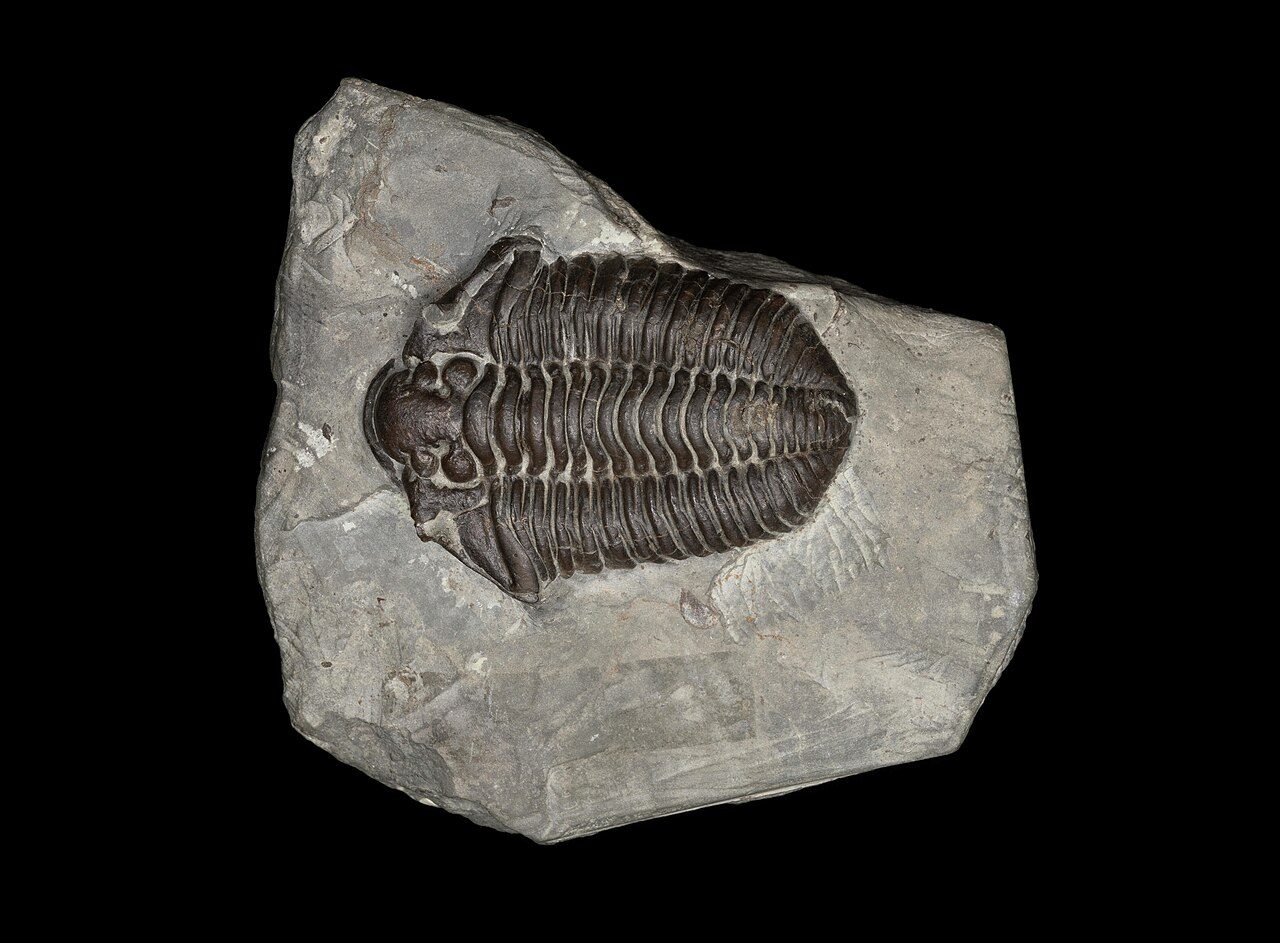
Trilobites appear abruptly early in the Cambrian and came to dominate the Cambrian and early Ordovician seas. After a long decline they finally died out at the end of the Permian, about 250 million years ago.
Most trilobites had compound eyes made of many separate lenses. Most were 3 to 6 cm long, but some, such as Paradoxides, were giants up to 60 cm or more, while the tiny blind agnostids were only a few millimetres long. Calymene blumenbachii from the Silurian rocks of Dudley was known locally as the Dudley Bug, and it is on the town’s coat of arms.
Found in Britain. See where Britain was at the time in Britain’s journey.
Read more in The first animals.
Also in life in the sea
- Graptolites Floating colonies that look like pencil marks on rock
- Sea scorpions Armoured hunters, some longer than a person
- Ichthyosaurus A dolphin-shaped sea reptile
- Ammonites Coiled-shell relatives of the nautilus
- Megalodon The largest shark that ever lived
Sources
- British Geological Survey, Trilobites