Up to 24.3 m long, by a 2025 estimate from its backbone; estimates from teeth gave 15 to 18 m. Beside a person 1.75 m tall; ticks every metre.Body shape drawn for this site
DebatedHow big it grew. Estimates from its teeth gave 15 to 18 m; a 2025 study of its backbone says it may have reached 24.3 m.
- When
- About 23 to 3.6 million years ago
- Where
- Oceans worldwide
- Size
- Up to 24.3 m long, by a 2025 estimate from its backbone; estimates from teeth gave 15 to 18 m
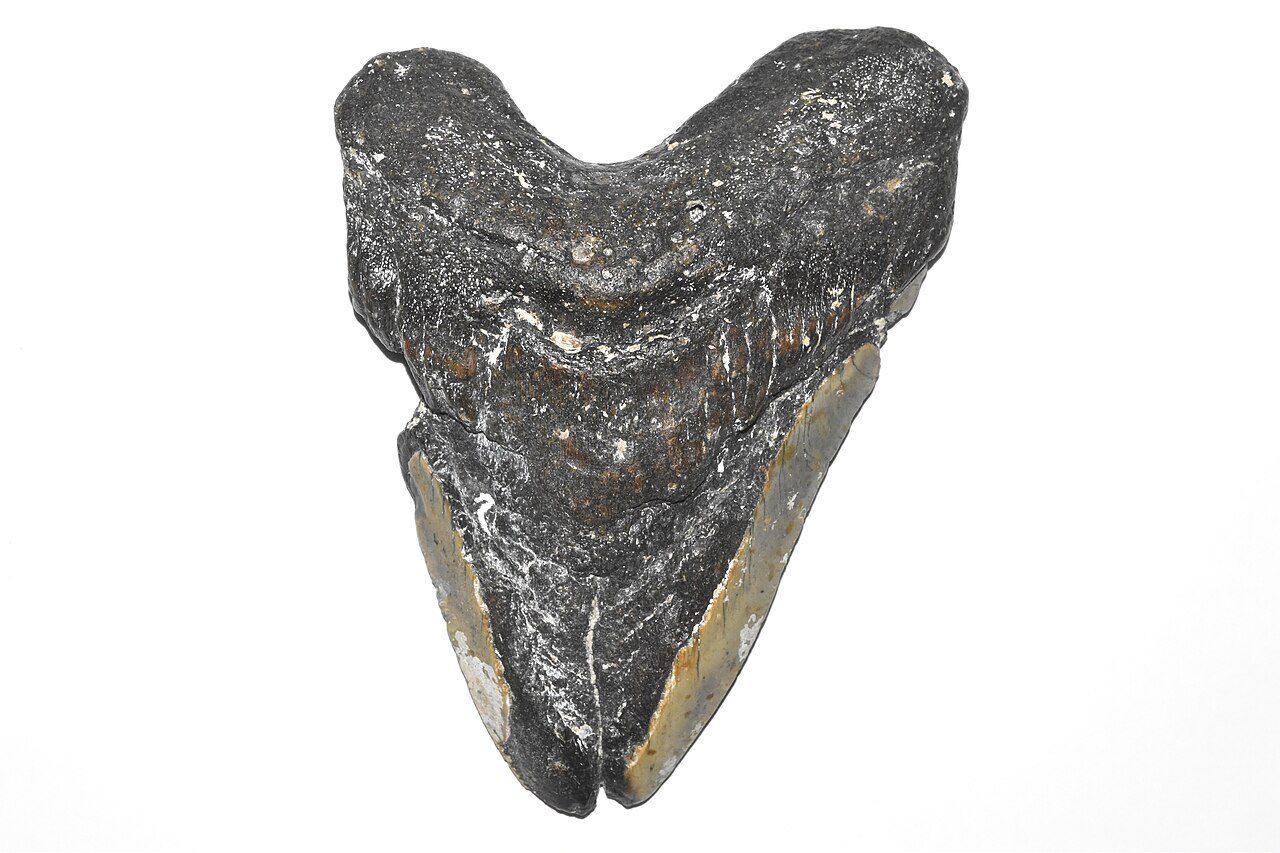
Otodus megalodon ruled the oceans for nearly 20 million years. No complete skeleton has ever been found, so for a long time its size was worked out from its teeth, which reach almost 18 cm long; a great white’s are usually about 5 cm. Those estimates gave a maximum of 15 to 18 metres.
In 2025, 29 fossil shark experts used partial backbones found in Belgium and Denmark instead. They estimated it may have reached 24.3 metres and 94 tonnes: about four times the length of the largest great white ever recorded, and a few metres longer than the biggest whale shark. Its babies may have been up to 3.9 metres long at birth. It ate meat, most likely whales and large fish, and fossil bones have been found with its tooth marks in them.
Also in life in the sea
- Trilobites Armoured sea arthropods that lasted for more than 250 million years
- Graptolites Floating colonies that look like pencil marks on rock
- Sea scorpions Armoured hunters, some longer than a person
- Ichthyosaurus A dolphin-shaped sea reptile
- Ammonites Coiled-shell relatives of the nautilus
Sources
- Shimada, Motani and 27 others, Palaeontologia Electronica (2025), Reassessment of the possible size, form, weight, cruising speed, and growth parameters of the extinct megatooth shark, Otodus megalodon
- Natural History Museum, London, Megalodon: the truth about the largest shark that ever lived