The ground under you is 4.54 billion years old. Read it a layer at a time.
Fall to the centre of the Earth at true scale. Walk back through time to before there was air you could breathe. Touch the rock below to see when each layer was laid down.
The layers, as a list
- Quaternary 2.58 to 0 million years ago
- Neogene 23.04 to 2.58 million years ago
- Paleogene 66 to 23.04 million years ago
- Cretaceous 143.1 to 66 million years ago
- Jurassic 201.4 to 143.1 million years ago
- Triassic 251.902 to 201.4 million years ago
- Permian 298.9 to 251.902 million years ago
- Carboniferous 358.86 to 298.9 million years ago
- Devonian 419.62 to 358.86 million years ago
- Silurian 443.1 to 419.62 million years ago
- Ordovician 486.85 to 443.1 million years ago
- Cambrian 538.8 to 486.85 million years ago
- Precambrian 4,540 to 538.8 million years ago
Three journeys
The Earth, as it was
Nearly all the land was one supercontinent, Pangaea. Spin the globe through a thousand million years of moving continents, and see where the fossils on this site were found when their animals were alive.
Spin the globeSurface to Core
Scroll from your feet to the centre of the planet at a fixed, true scale. The deepest hole people have ever dug is gone before the first screen ends.
Start fallingThe Walk
One metre for every million years, 4.54 km in all. Dinosaurs turn up in the last 230 metres. Our species, in the last 30 centimetres.
Start walkingFrom the rocks
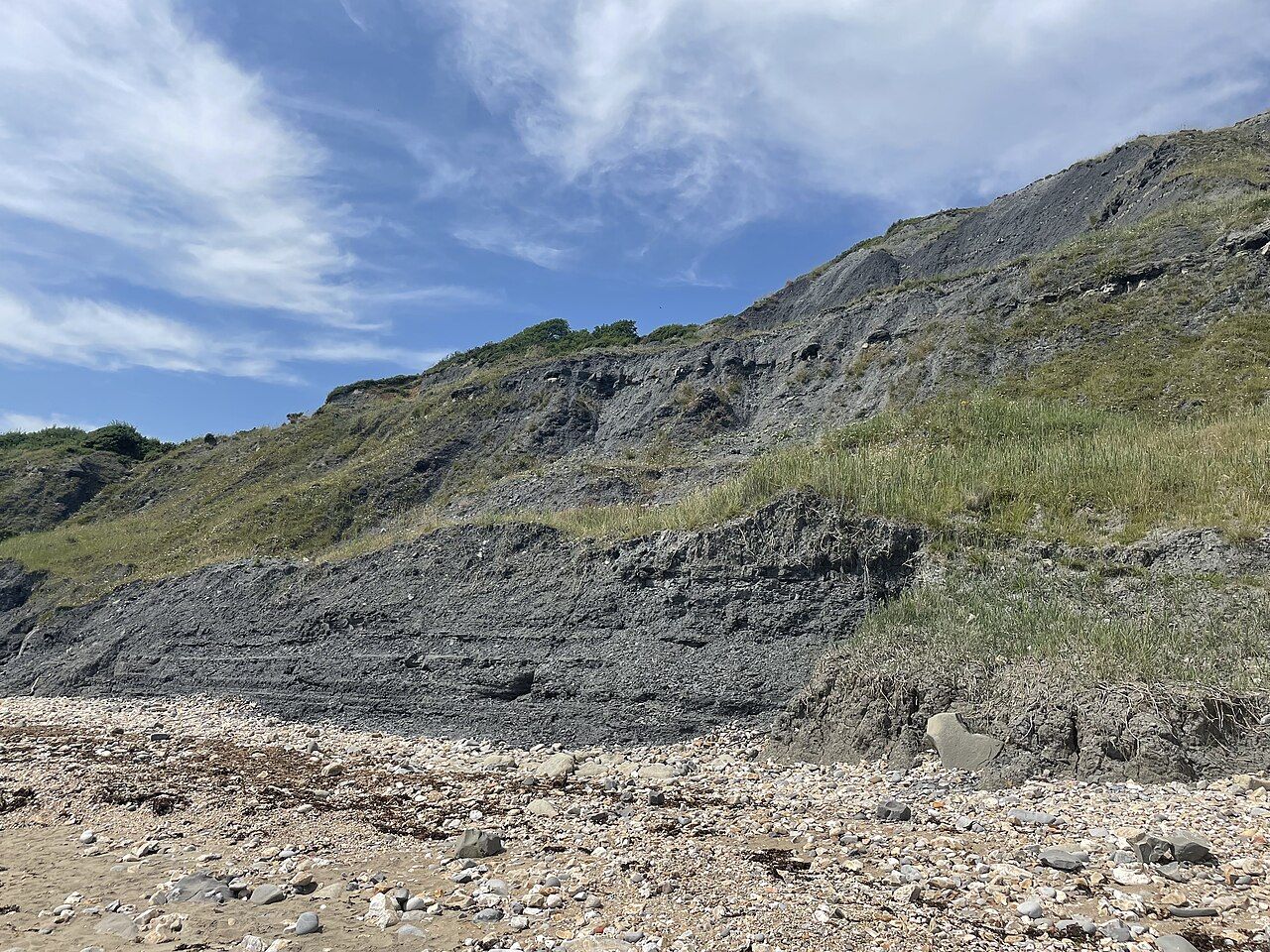 Black Ven, near Lyme Regis: Jurassic sea-floor mud, where Mary Anning hunted fossils.LunaEatsTuna, CC BY-SA 4.0, via Wikimedia Commons
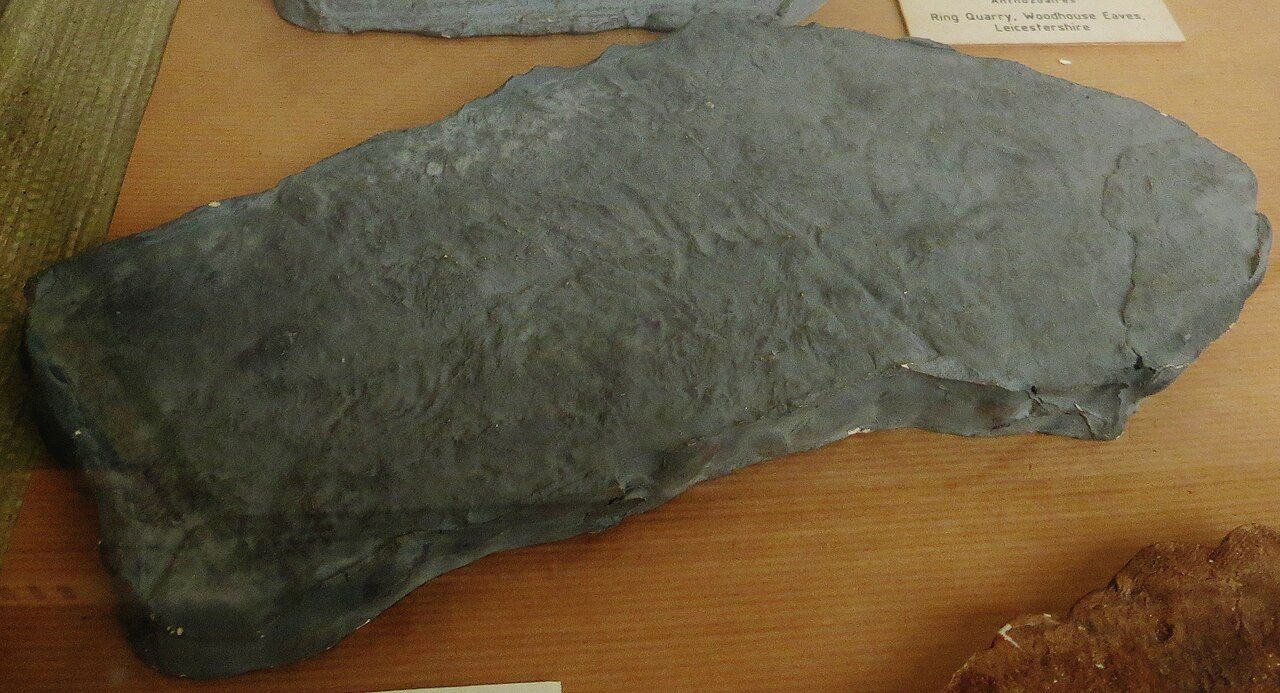 Charnia, one of the oldest animals known, first recognised in Leicestershire.Ghedo, CC BY-SA 4.0, via Wikimedia Commons
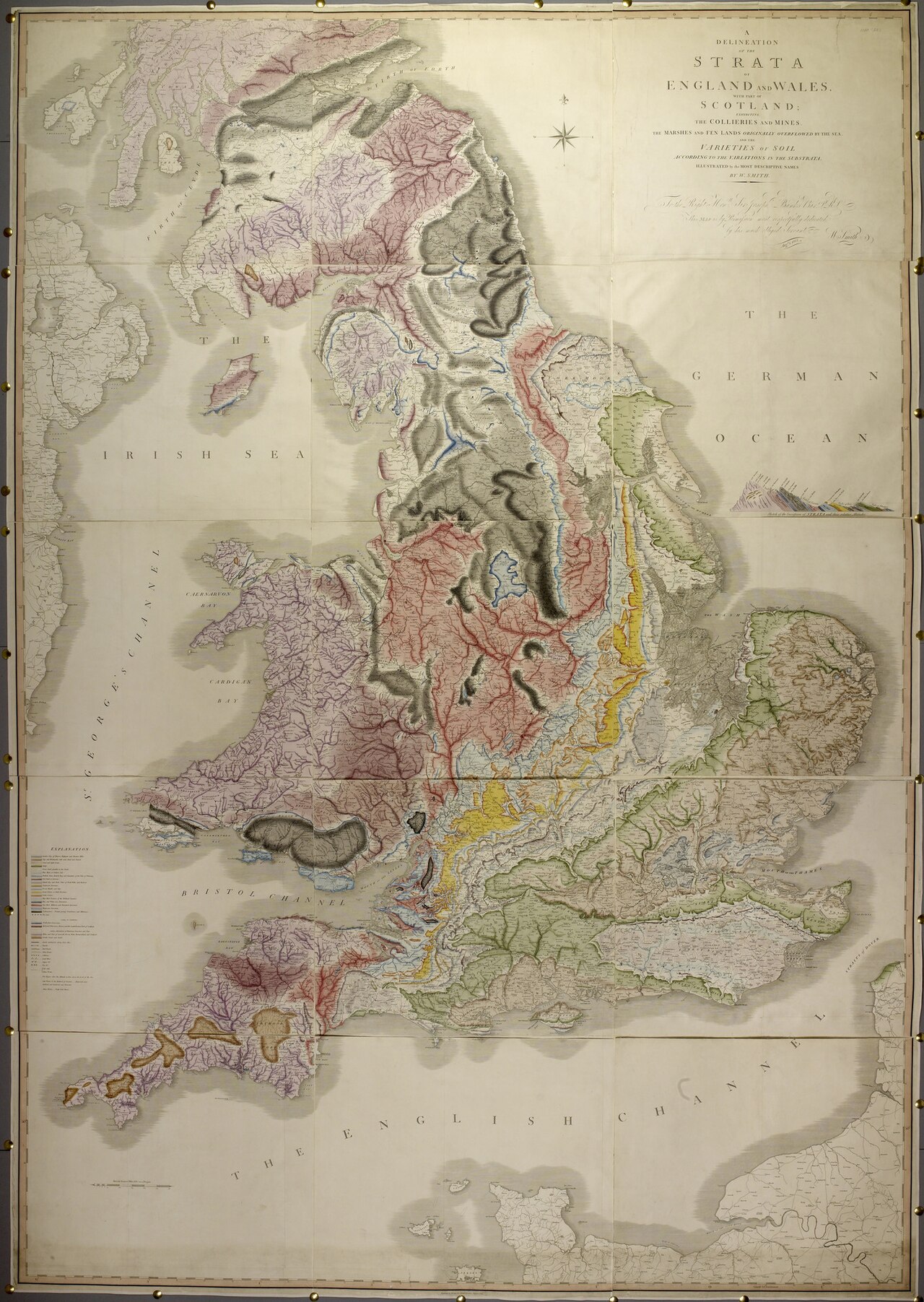 William Smith’s 1815 map, the first geological map of a whole country.William Smith; scan by the British Library, CC0 1.0, via Wikimedia Commons
Two cores through the atlas
Everything on the site sits in one of two columns: down through the planet, or back through time. Each band is a collection, as thick as the number of pieces planned for it. The numbers say how many are written so far, out of how many planned.
Open the atlasSpace
- Space environment0 of 12
- Atmosphere1 of 12
- Oceans and water2 of 12
- Ecology0 of 12
- Human impact0 of 10
- Landforms1 of 10
- Natural hazards3 of 10
- Rocks and minerals1 of 10
- Plate tectonics4 of 10
- Interior3 of 11
The centre
Down through the planet
Now
- Climate history1 of 8
- Fossils and extinction2 of 12
- Prehistoric life5 of 10
- Evolution of life7 of 12
- Geological time3 of 9
- Origins1 of 9
4,567 million years ago
Back through time