Our sources give no reliable size for Ammonites, so this outline of its body shape is not drawn to scale.
- When
- In Britain’s Jurassic and Cretaceous rocks; extinct at the end of the Cretaceous
- Where
- Seas worldwide; Lyme Regis and Whitby are famous for them
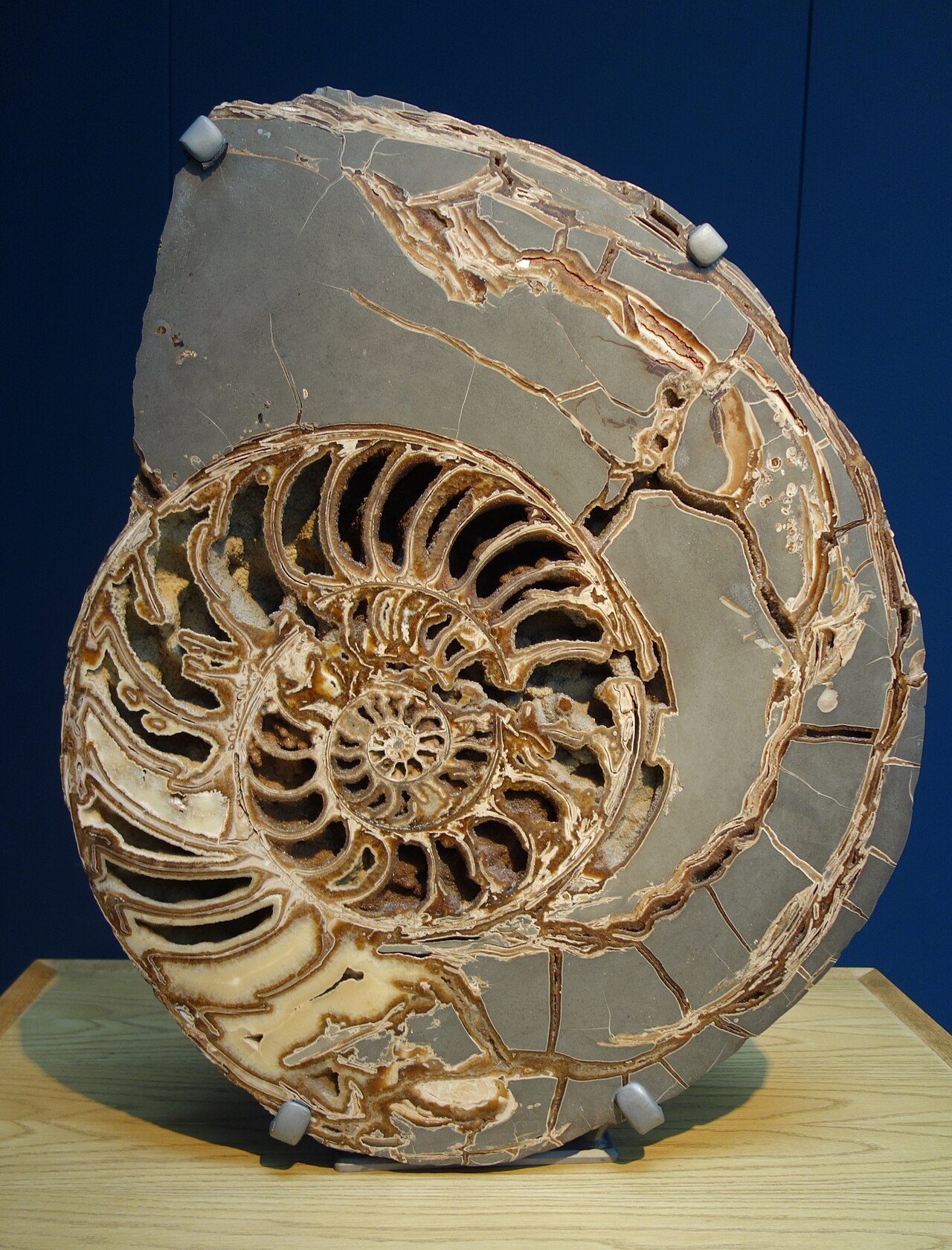
Ammonites were sea animals related to today’s nautilus, with a coiled, chambered shell. They ranged from very small to the height of a person.
They changed so fast that geologists use them to date rocks. They died out at the end of the Cretaceous, at about the same time as the dinosaurs. At Whitby they were once called snakestones.
Found in Britain. See where Britain was at the time in Britain’s journey.
Read more in Fossils.
Also in life in the sea
- Trilobites Armoured sea arthropods that lasted for more than 250 million years
- Graptolites Floating colonies that look like pencil marks on rock
- Sea scorpions Armoured hunters, some longer than a person
- Ichthyosaurus A dolphin-shaped sea reptile
- Megalodon The largest shark that ever lived
Sources
- British Geological Survey, Ammonites