Learn · Life · 7 minute read
Flowers and insects
Insects came first. Flowers arrived late and burst into thousands of kinds, and now most of them cannot do without insects.
Flowers and insects seem made for each other, but they did not start together. Insects came first, by a long way. Flowering plants arrived when the dinosaurs had already ruled for tens of millions of years, and since then the two have shaped each other.
The first insects are hard to pin down
The early fossil record of insects is thin. Only a few finds come from the Devonian, more than 359 million years ago, and every one of them is problematic, because the fossils are incomplete and hard to interpret.
The best-known is Rhyniognatha, from the Rhynie chert in Aberdeenshire, the hot-spring rock described in Onto the land. Only part of its head survives. It was long held up as one of the earliest flying insects. In 2017, two scientists looked again using 3D imaging and found that it more likely belongs to the myriapods, the group that includes centipedes. This is how science works with scraps: the oldest insect is still an open question.
By the Carboniferous, the picture is clear. Insects with wings that cannot fold back, such as dragonflies and mayflies, flourished and spread. Along with millipedes, scorpions and spiders, they became an important part of life in the coal forests.
Flowers arrive
Flowering plants, also called angiosperms, are the newcomers. One of the earliest known is Archaefructus, a soft-stemmed water plant that lived in what is now Liaoning, China, at least 124.6 million years ago. Whole plants have been found, from roots to the shoots that made seeds. It had no petals. When scientists combined its features with the DNA of living plants, it came out as a close relative of all other flowering plants.
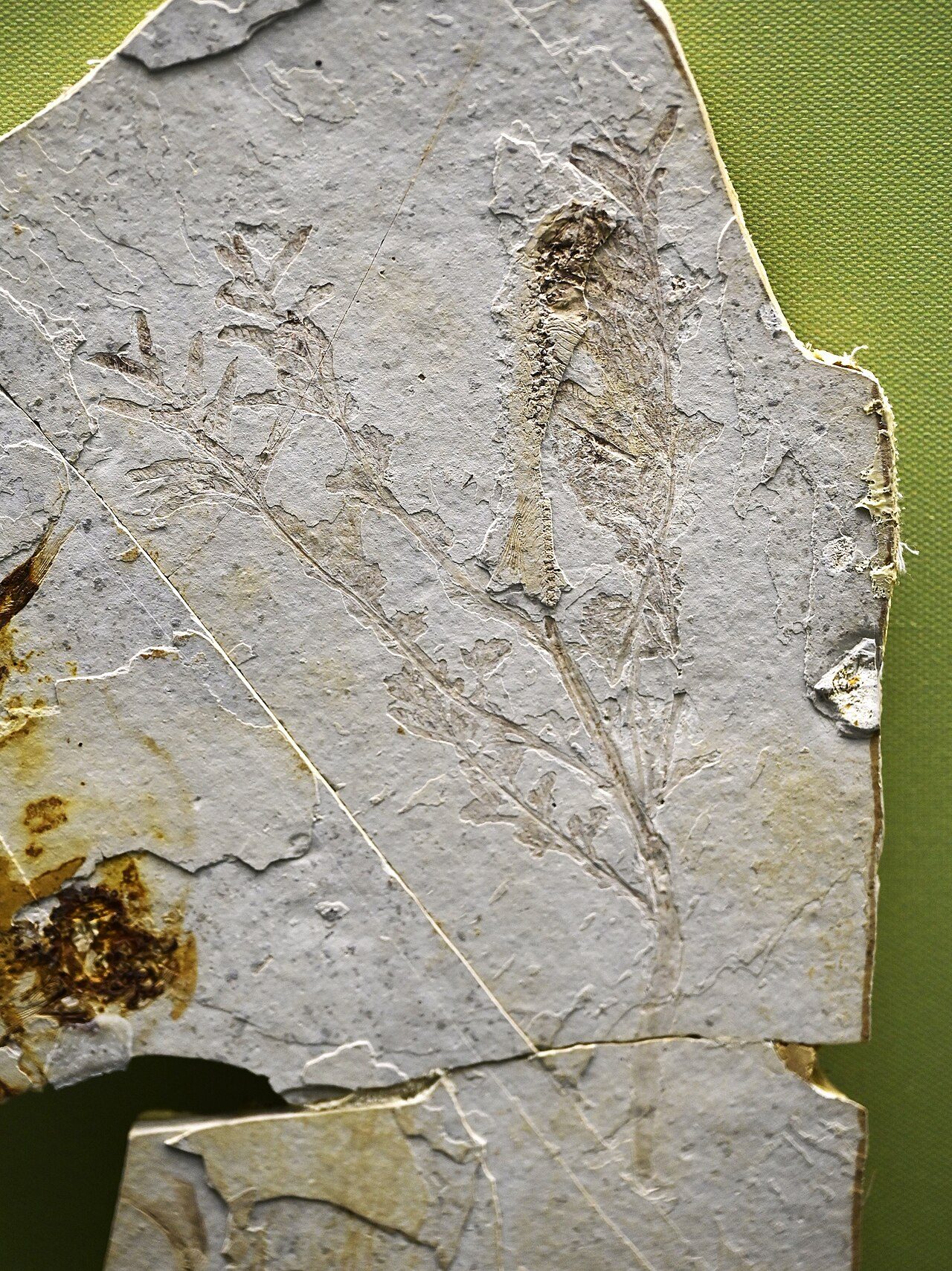
Once they appeared, flowering plants spread fast. Charles Darwin was puzzled by how suddenly so many kinds turn up in the fossil record, and called it an “abominable mystery”. In 2024, scientists from 138 organisations, working with the Royal Botanic Gardens, Kew, built a family tree of flowering plants from the DNA of more than 9,500 species and dated it with 200 fossils. It showed that Darwin was right about the burst: soon after flowering plants first appeared, they gave rise to more than 80% of the major groups alive today. The pace then slowed for about 100 million years, until another surge about 40 million years ago, when the world was cooling.
There are about 330,000 known species of flowering plant today.
Flowers need animals
A flower is a way of moving pollen from one plant to another. Some plants leave it to the wind, but most use animals, chiefly insects, to carry it. In 2011, ecologists added up surveys of plant communities around the world. Their estimate was that about 87.5% of flowering plant species are pollinated by animals: about 78% in cool, temperate places and 94% in the tropics.
- 35 in 40
- pollinated by animals, mostly insects
- 5 in 40
- pollinated another way, mostly by wind
That is why the decline of pollinating insects worries ecologists: most flowering plants depend on them.