Learn · Beginnings · 8 minute read
The first billion years
A disc of dust, a world of molten rock, a collision that made the Moon, and then the first oceans and the first life.
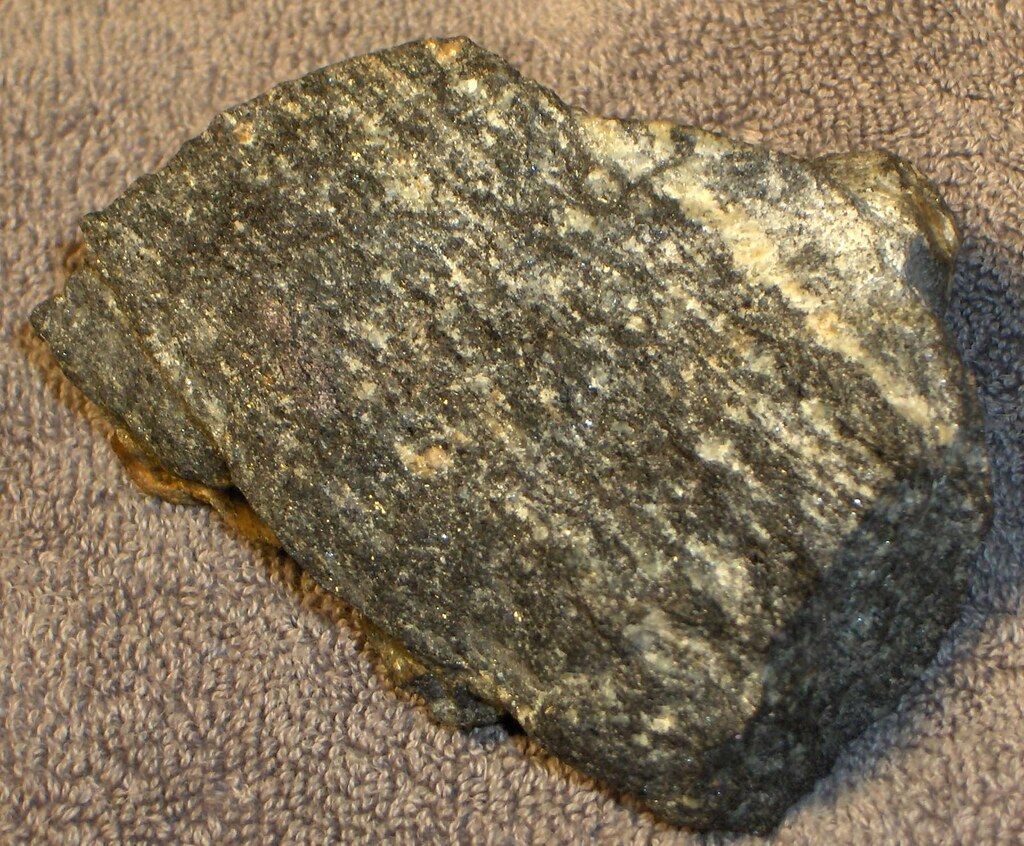
The first part of the Earth's story is the hardest to read, because almost all the pages have been destroyed. Rock gets buried, melted, squeezed and worn away again and again. The oldest whole rocks we have are about 4,030 million years old, and the oldest single crystals about 4,404 million. Everything before that has to be pieced together from meteorites, from the Moon, and from physics.
Made from leftovers
The Sun formed from a collapsing cloud of gas and dust. What was left over spun round it in a flat disc. The oldest solid grains from that disc have been found inside meteorites, and are 4,567 million years old. That is the closest thing we have to a birthday for the Solar System.
The Earth grew by collecting this material, at first gently and then in violent collisions. Its age, about 4,540 million years, comes from measuring lead in meteorites and in the oldest lead ores on Earth. The figure is good to about 1%.
The Hadean: an eon with no rocks
Geologists call the first eon of Earth history the Hadean, after Hades, the Greek underworld. It lasted until about 4,031 million years ago. The name suits the picture of a molten world under a rain of asteroids. But the few crystals that survive from it suggest that, for some of that time at least, the Earth was calmer than its name.
Those crystals are zircons, tiny and almost indestructible. Grains washed out of old sandstone at Jack Hills in Western Australia include one 4,404 million years old. The oxygen in it suggests it formed from rock that had been in contact with liquid water near the surface. So within about 150 million years of forming, the Earth may already have had continents and oceans.
The Archean: life gets going
The next eon, the Archean, ran from about 4,031 to 2,500 million years ago. The air had almost no oxygen, and the Sun was fainter than today. Yet life was already here. In the Pilbara of Western Australia there are fossil reefs 3,430 million years old, built by mats of microbes that trapped and bound sediment into domes and cones. These mounds are called stromatolites, and living ones can still be found today, in a few very salty bays.
How life began is still one of the great open questions. What the rocks do tell us is that it started early, and that for most of the Earth's history, life was microscopic.